New-home estimating · Australia-wide
Every quote, priced against a measure the trade didn’t write.
Fixed-fee quantity take-offs for new homes — measured in 24–48 hours, the numbers are yours.
Every quote you get is priced against the same set of numbers we measured — so nobody can lift a price by padding the quantities. Back in 24–48 hours. Fixed fee. Yours to keep.
You take that list into the room. You can point at the line — the square metres, the cubic metres, the lineal metres — instead of nodding while a trade explains their own measure. For Australian builders putting up new homes, about 5 to 50 a year, without a full-time estimator.
Proof, not promises
Give us a job you already know the numbers for. We'll measure it blind and show you the variance, line by line — if it doesn't match, it costs you nothing.
See the full sample report → · No sign-up. No sales call to get a number.
The take-off
The number you can point at, if a quote looks high.
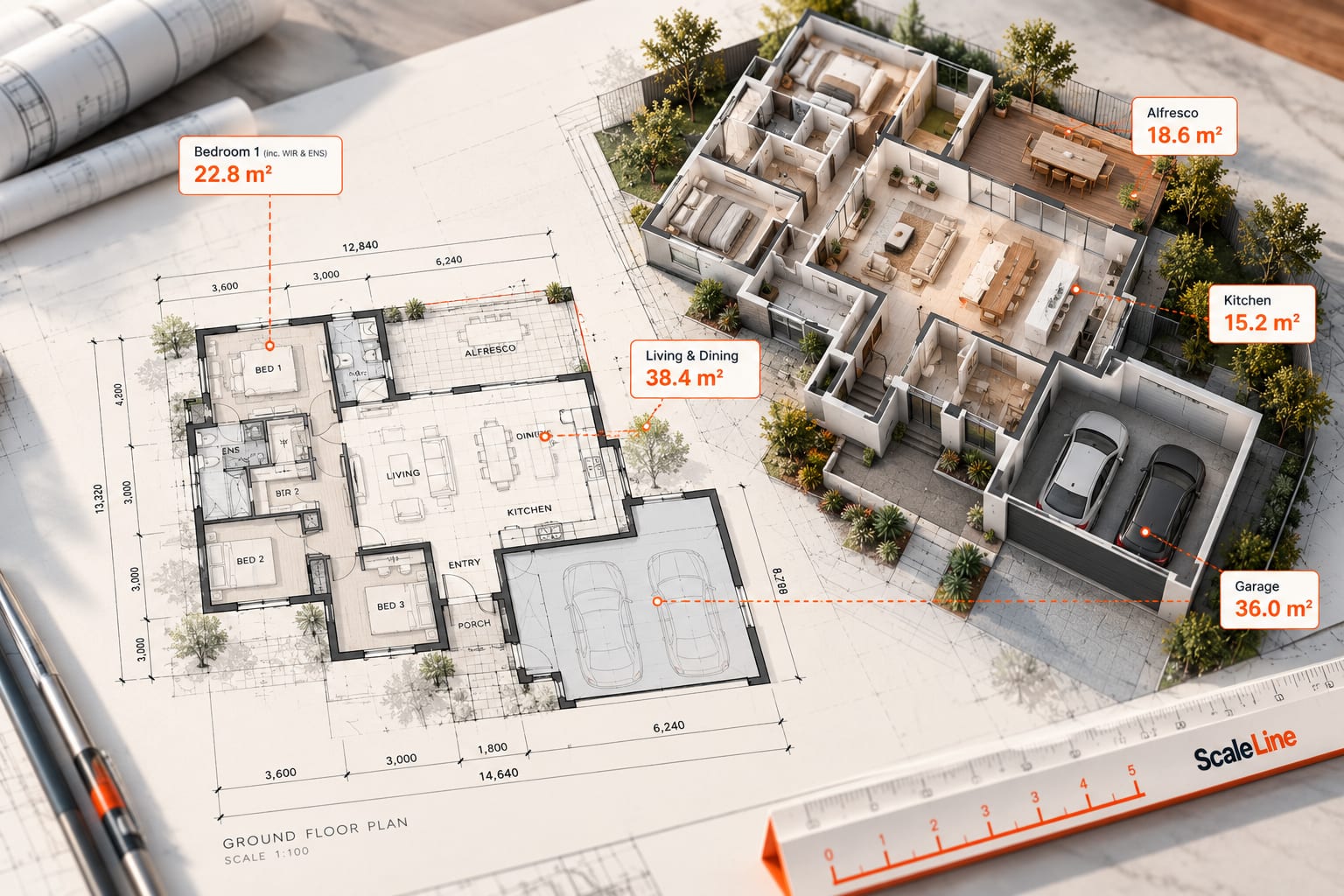
Each area is measured off your plans and tied to the sheet it came from. If a trade’s quantity doesn’t match, you can see it — you don’t have to take their word.
The problem
Quote it yourself at midnight — or take the trade’s word for it.

Either way, you’re left without a measure of your own — so each trade counts the job its own way, and the dearer quote might be extra quantity, not a higher rate. You’re left guessing which quote is the job on the drawing.
Most small builders carry this alone. Quoting one home in a spreadsheet eats a day or two; a full-time estimator costs more than the work coming in; and estimators are hard to hire right now across the country.
Every state
estimating is on the 2025 national skills shortage list.
It’s not the rates. It’s whether the measure is the job on the drawing.
Split your three quotes into quantity and rate — free tool →
The difference
One take-off everyone prices — not three subbies measuring three different jobs.
Scaleline sits upstream: we measure once, you keep the numbers, and every quote can be read line-for-line because the scope is shared.
Same plans, two ways
Three measures, or one list everyone prices.
Each subbie measures alone
Three quantities for one job
Every subbie counts off their own copy of the plans. The measures don’t match, so a higher quote might be a larger job — not a higher rate.
Scaleline
One set of numbers. All three quote it.
We measure once. You keep the list. Every subbie prices that same list — so the only thing left to compare is the rate.
Illustrative layout only. Not a measured result from a built job.
What this isn’t
-
Not software.
You get the finished numbers — not a tool to learn.
-
Not a QS firm.
We measure. We don’t price, rank or recommend.
-
Not an offshore black box.
A local estimator checks the take-off before it ships. The desk is in Adelaide.
How it works
Send the plans. Get the list every trade has to price.
You give us the drawings. You get one set of quantities you own — so the next conversation is about rate, not about whose measure is the job.
- 01
Send your plans
one set of drawings, the project type, and which trades you need measured.
- 02
Get a measure you can stand behind
quantities trade by trade, each sourced to the drawing, back in 24–48 hours — the list you take into the room.
- 03
(Optional) Let trades price that same listPhase 2
the same measurements go to every trade. A higher quote is a higher rate — the quantities are already fixed, and they are not our prices.
Optional: Once the measure is locked, ask trades to price that same list.
The measure is neutral, and it stays yours — so nobody can talk a quote up by padding the quantities. Step 3 is yours to take or leave.
Estimate vs quote
A higher quote should sit above the line — not inside a bigger quantity.
The line is your quantities extended by an indicative rate. Trades price against that measure. If a quantity doesn’t match the drawing, that’s on us, and we re-issue it.
Why you can answer a trade
A finished take-off you can open on site.
-
Our engine reads the drawings,
-
local estimators check the work,
-
and every number is traced back to where it came from.
We read the vector and text layers first, then an estimator checks the take-off before it ships. You see the mechanism — so you can stand behind a number without quoting a percentage you can’t check.
What you get
The sheet you take to the trade.
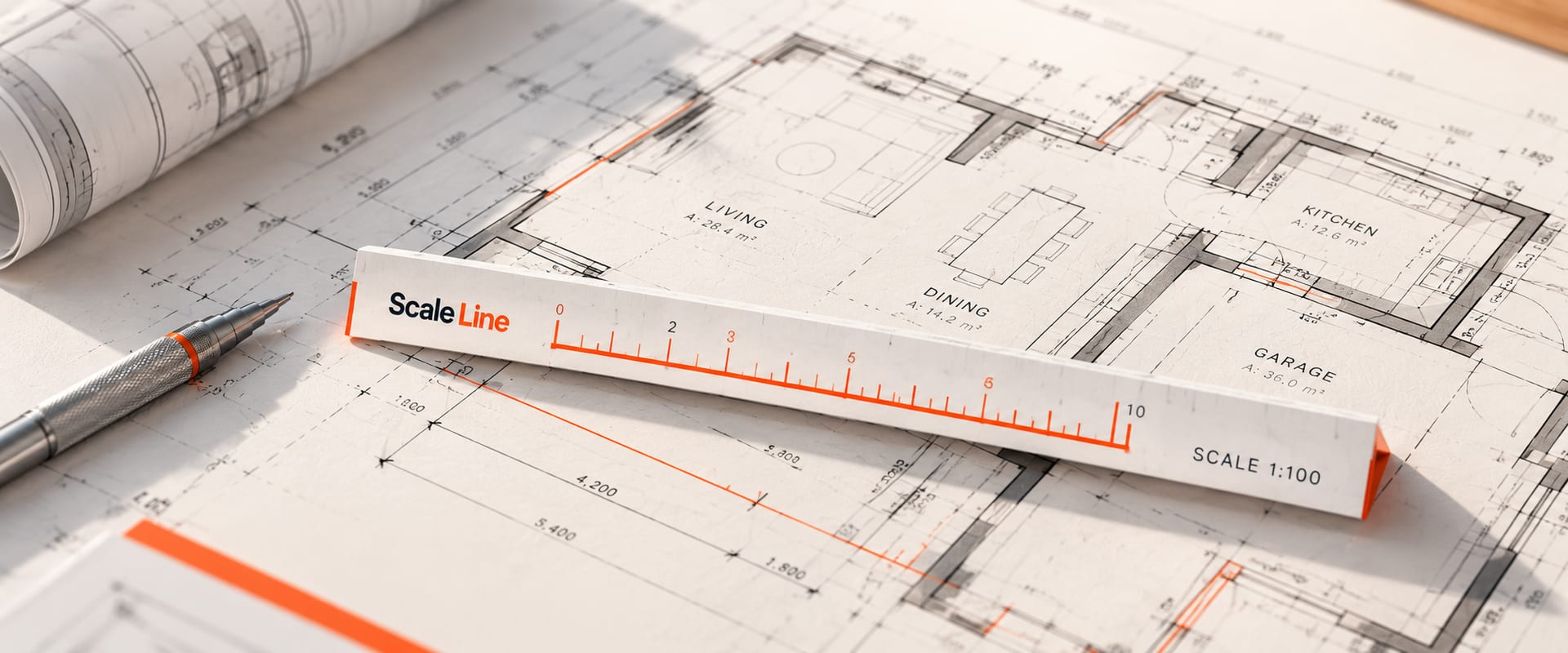
A bill of quantities, trade by trade, plus an Excel/CSV you can price. Every line shows the drawing page, the dimension, and a confidence figure — so you can open it and point.
Inclusions and exclusions are stated plainly, so you know exactly what's in each number and what isn't. An accuracy class is stated up front for each section of the report.
PDF to read in the room. Excel/CSV to hand over.
Accuracy class covers quantity, not cost. Quantities carry a confidence figure; the benchmark range is indicative and carries no accuracy promise.
| Code | Item | Qty | Unit |
|---|---|---|---|
| FOOT-Lot1-01 | Concrete to slab and footings (N25) | 21.88 | m³ |
| FOOT-Lot1-03 | Formwork — contact area | 16.78 | m² |
| CLAD-Lot1-01 | Hebel PowerPanel — installed net wall area | 112.4 | m² |
| CLAD-Lot1-04 | Control joints — backing rod & sealant | 21.0 | m |
| FRAM-Lot1-01 | External wall frame — 90mm MGP10 | 96.4 | m |
| ROOF-Lot1-01 | Fink trusses @ pitch 22.5° | 28 | ea |
Measured to the millimetre. Sourced to the page.
Why you can trust it
We won’t borrow someone else’s job. Check us on yours.

We’re early, so there is no wall of case studies. Here’s what you can check instead.
- Blind test — a job you've already built, before you stake a quote on our numbers.
- Published, fixed pricing — the fee is on the page, not in a call.
- Every number sourced — to the drawing page, so you can point at the line.
- We don't rank, score or recommend — a higher quote is not one we talked up.
Pricing
The fee is on the page — before you send a drawing.
You can see what the measure costs before you talk to us. The fee buys the quantities. It does not buy a price we negotiated for you.
Fixed fees per trade, per home, or per month — set out in full on the pricing page.
No "contact us for a quote".
After delivery
The first report is the start of the workflow — not the end of the relationship.
Price the BOQ, handle revisions on the same rules, then queue the next job — or keep a monthly take-off run so every tender reads the same way.
- 01
Report lands
PDF plus Excel/CSV: trade-by-trade quantities, source page and accuracy class on every line. The fee covers measurement only — pricing stays with you and your trades.
- 02
You price or brief trades
Export the BOQ to your spreadsheet or send the frozen quantities to subbies. Optional Trade Quotes runs the same numbers to independent trades — we pass quotes through, we do not rank them.
- 03
Drawings change
Revision set, client variation, or late consultant issue — send the updated sheets. We re-issue against the same scope rules so you can see what moved, not start from zero.
Re-issue SLA: TODO(EVIDENCE)
Don’t walk into the next quote without your own measure.
Pick a job you’ve already built. Send the drawings, not your costs. If the numbers hold, you’ll know what you’re holding when the next trade prices a job.
Or email hello@scaleline.com.au.