Insights
Straight talk on measuring residential jobs.
Quantities vs prices, what estimating really costs, and how to take off a trade properly.

- Process
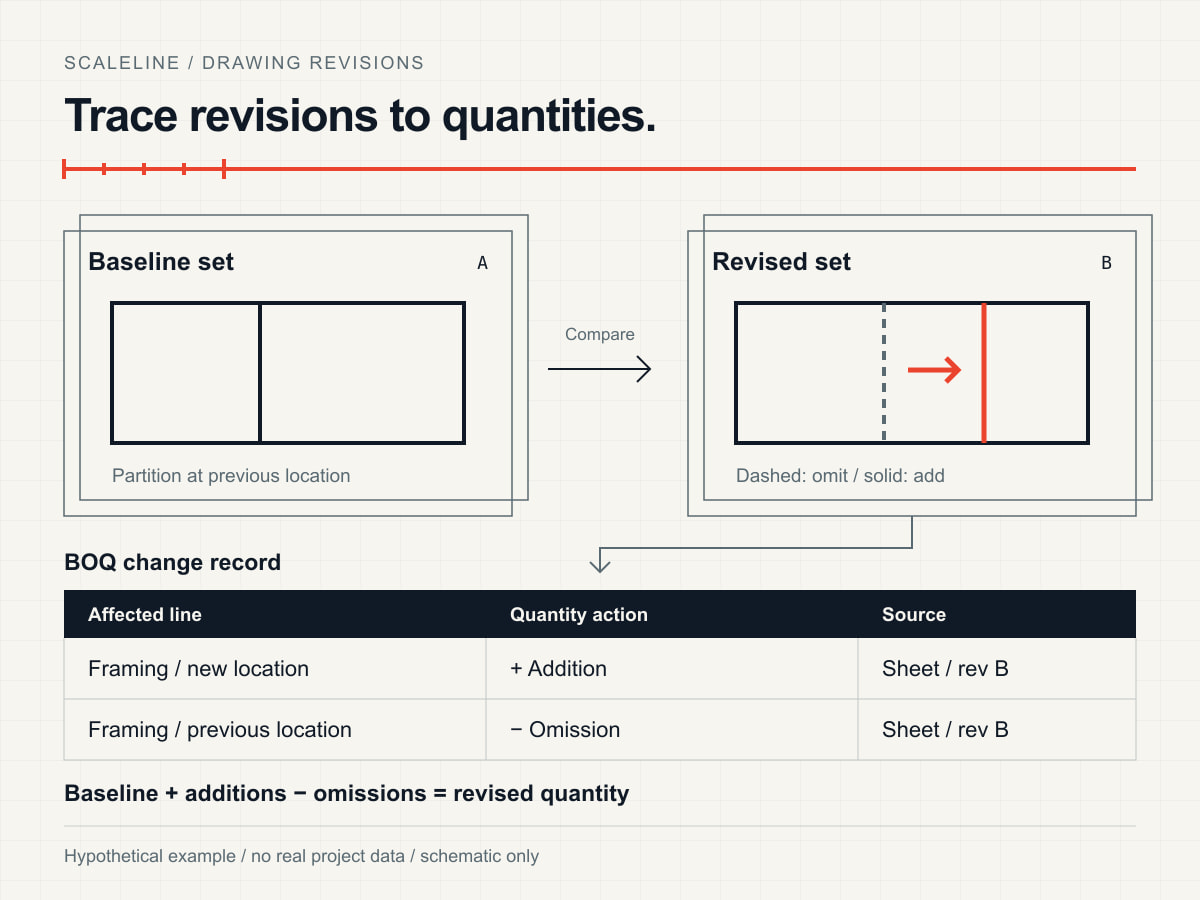
Drawing revisions and your bill of quantities: what actually changes
What to check when a revised drawing set lands after your take-off or tender is already out — how to find what changed, reconcile additions and omissions without a full re-measure, and reissue the pack so subcontractors don't price the old version.
7 min read
- Process
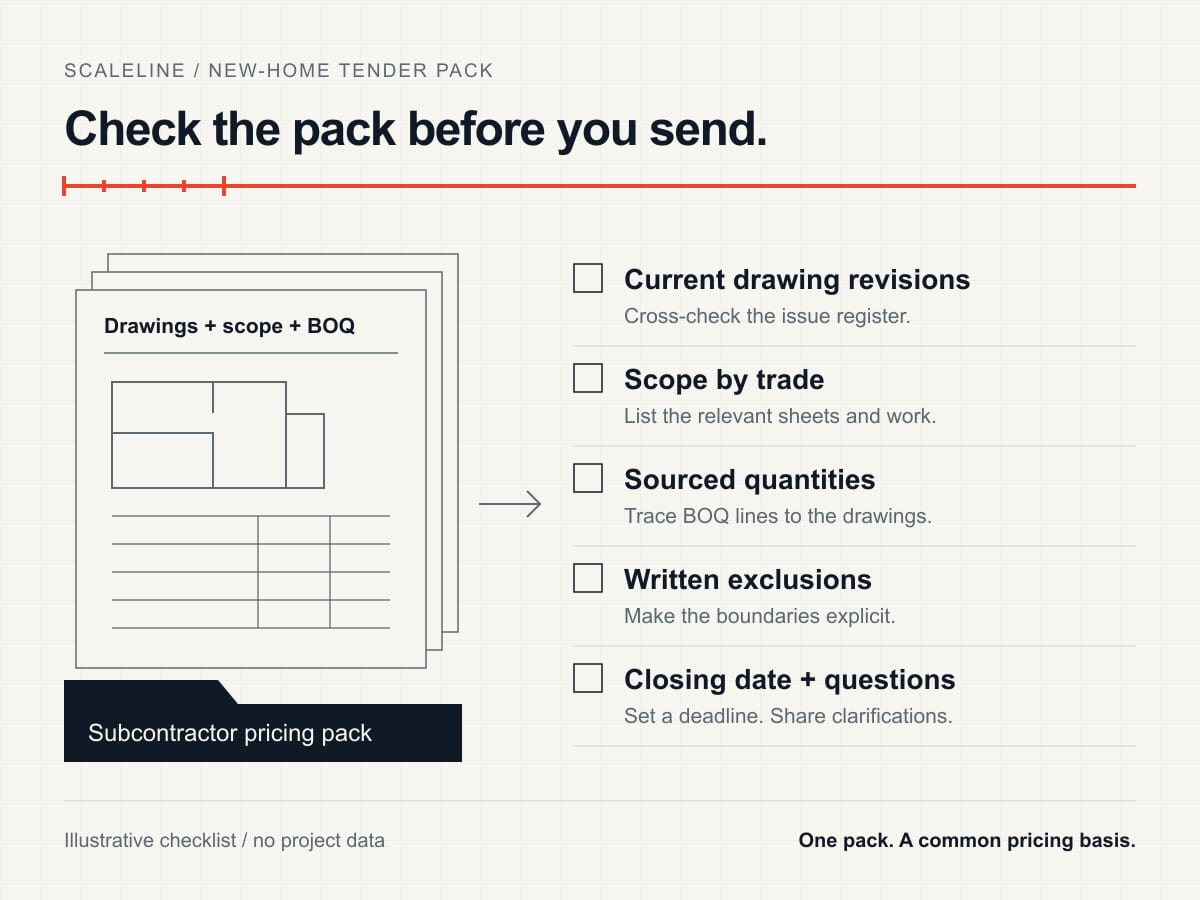
Tender package checklist for a new home
What to check before you send drawings and a bill of quantities to subcontractors for pricing — drawing revisions, scope split by trade, sourced quantities, written exclusions, and a closing date for questions.
7 min read
- Process
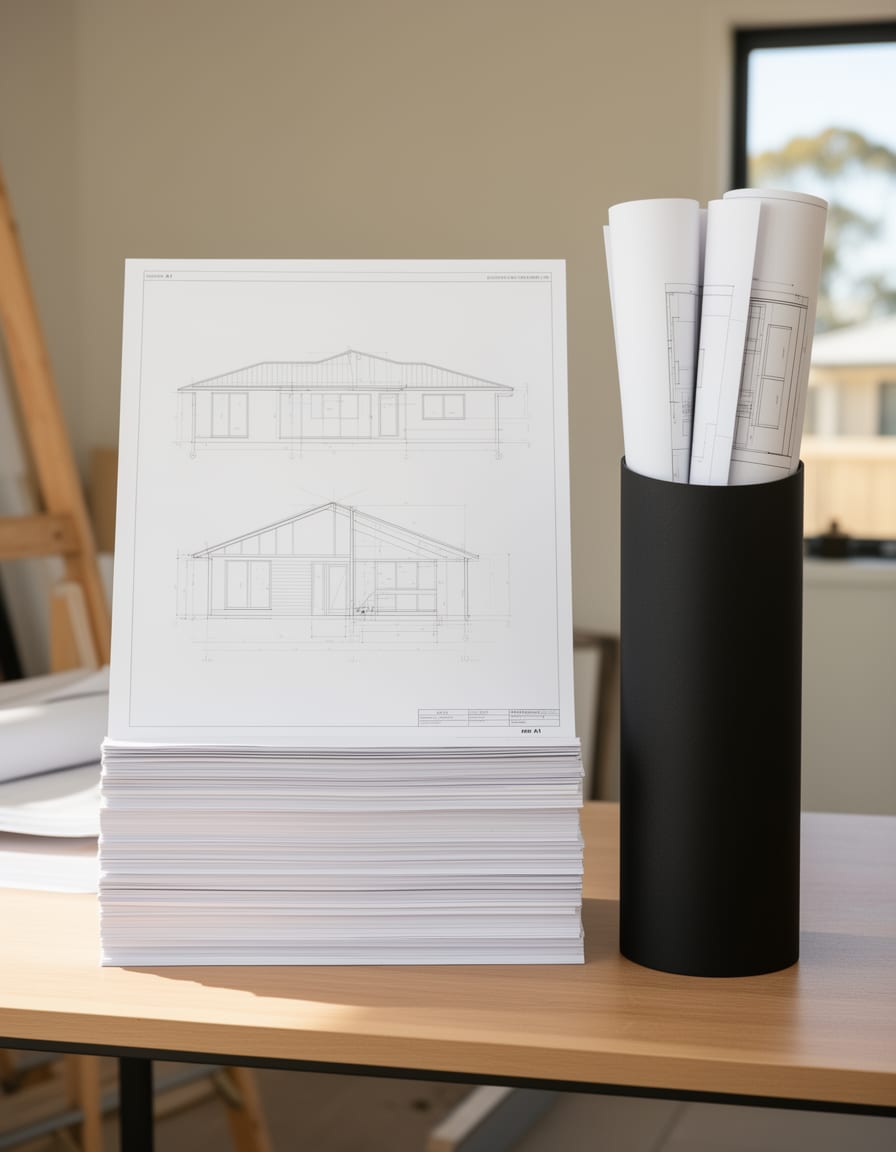
What drawings to send for a quantity takeoff
What counts as a usable drawing set for a residential quantity takeoff — architectural, structural, specification and schedule — what's required, what's optional, and what happens when something's missing.
7 min read
- Process
Why your estimate and your quotes will never match — and why that's the whole point
A measured quantity is a point on the drawing. A trade's quote is their price. Reading one against the other is the job — the gap is not a reason to throw the quantities out.
4 min read

- Site conditions
SA wind region and soil class: why site classification shapes the take-off
How SA wind regions and AS 2870 soil classes change the quantities a builder has to price — and why an Adelaide take-off has to read the local conditions, not a national average.
8 min read

- Method
The blind test: how we measure our own estimating accuracy
We don't quote an accuracy percentage — we run a blind test instead. Here's how the estimating accuracy test works, and what the variance actually shows.
8 min read

- Cost
Fixed-price vs hourly estimating: which one protects you
Hourly estimating rewards the hours, not the outcome. Here's how fixed-price vs hourly estimating plays out on a real job, and why a fixed fee changes the incentive.
8 min read

- Method
How to read a bill of quantities: our sample, line by line
A line-by-line guide to reading a bill of quantities — source page, dimension, confidence, and the difference between a Measured line and an Estimate.
9 min read

- Cost
Onshore vs offshore estimating: what you actually get
Offshore estimating costs less on paper. Here's what the rate gap actually buys — time zones, drawing conventions, local rules — and what you keep onshore.
8 min read

- Trade takeoff
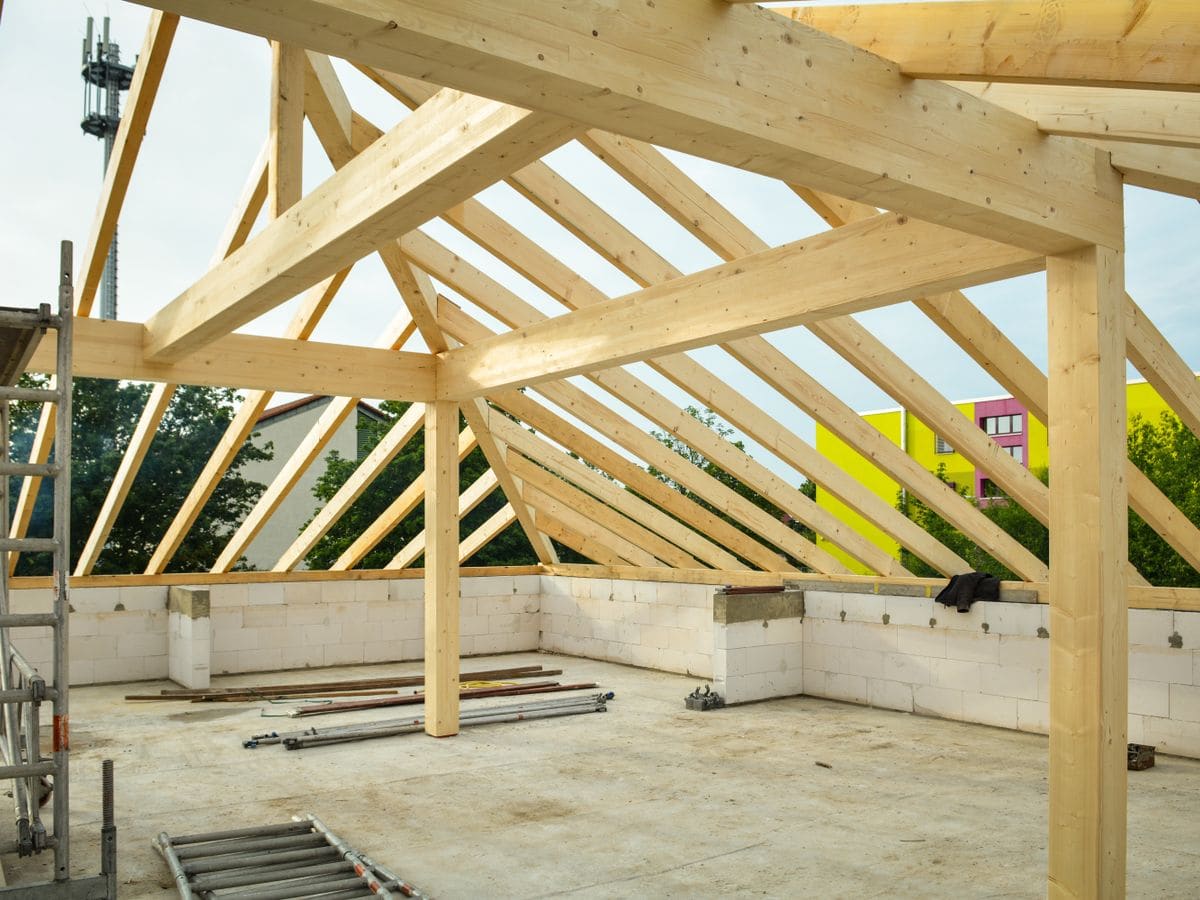
How to take off a roof from plans
How to measure a residential roof from the drawings — roof area, sheet quantities, battens, fascia and gutters, and the pitch factor that changes everything.
9 min read
- Trade takeoff
How to take off wall framing from plans
A practical guide to measuring wall framing from residential drawings — studs, plates, lintels, bracing and the openings that change every count.
9 min read
- Trade takeoff
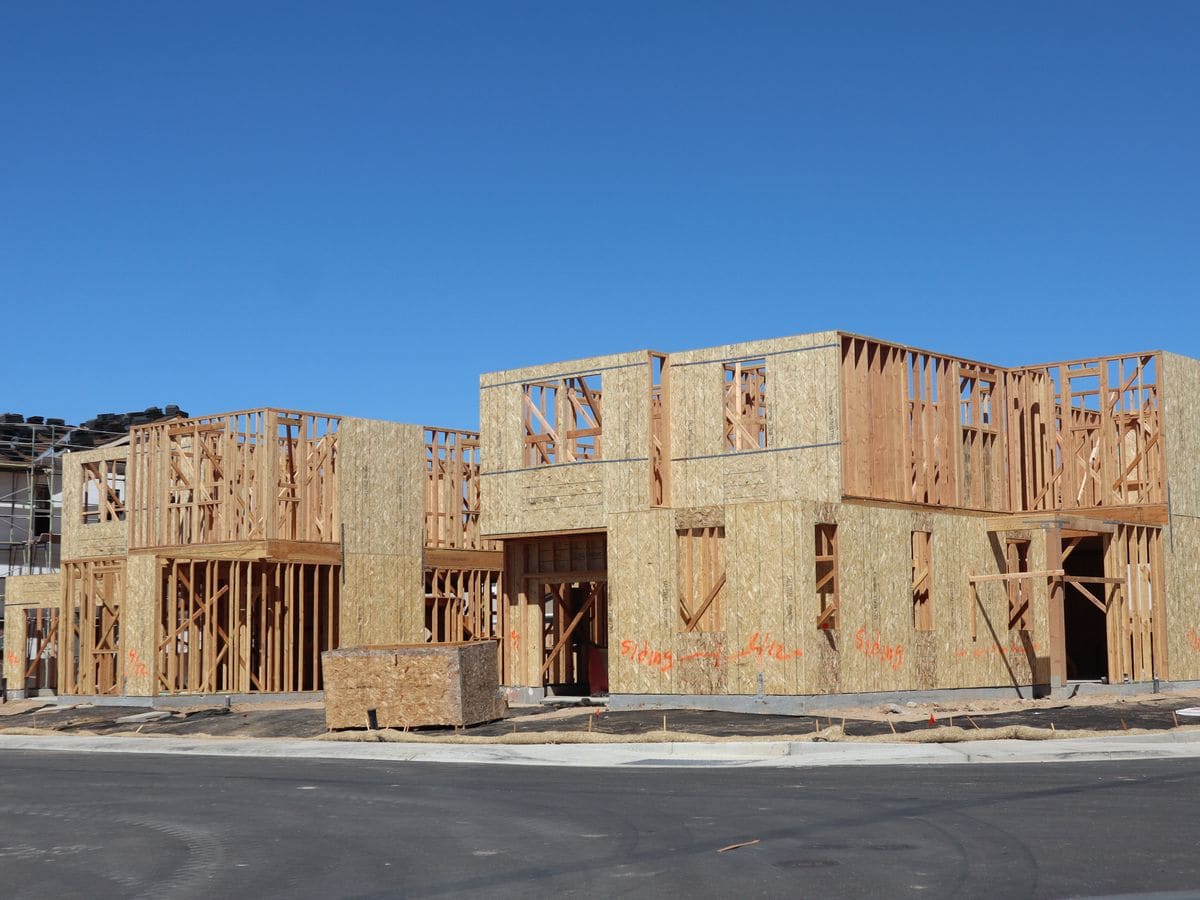
How to take off a slab and footings from plans
A step-by-step guide to measuring a residential slab and footings from the drawings — slab area, edge beams, waffle pods, reinforcement, and the deductions that are easy to miss.
9 min read
- Process
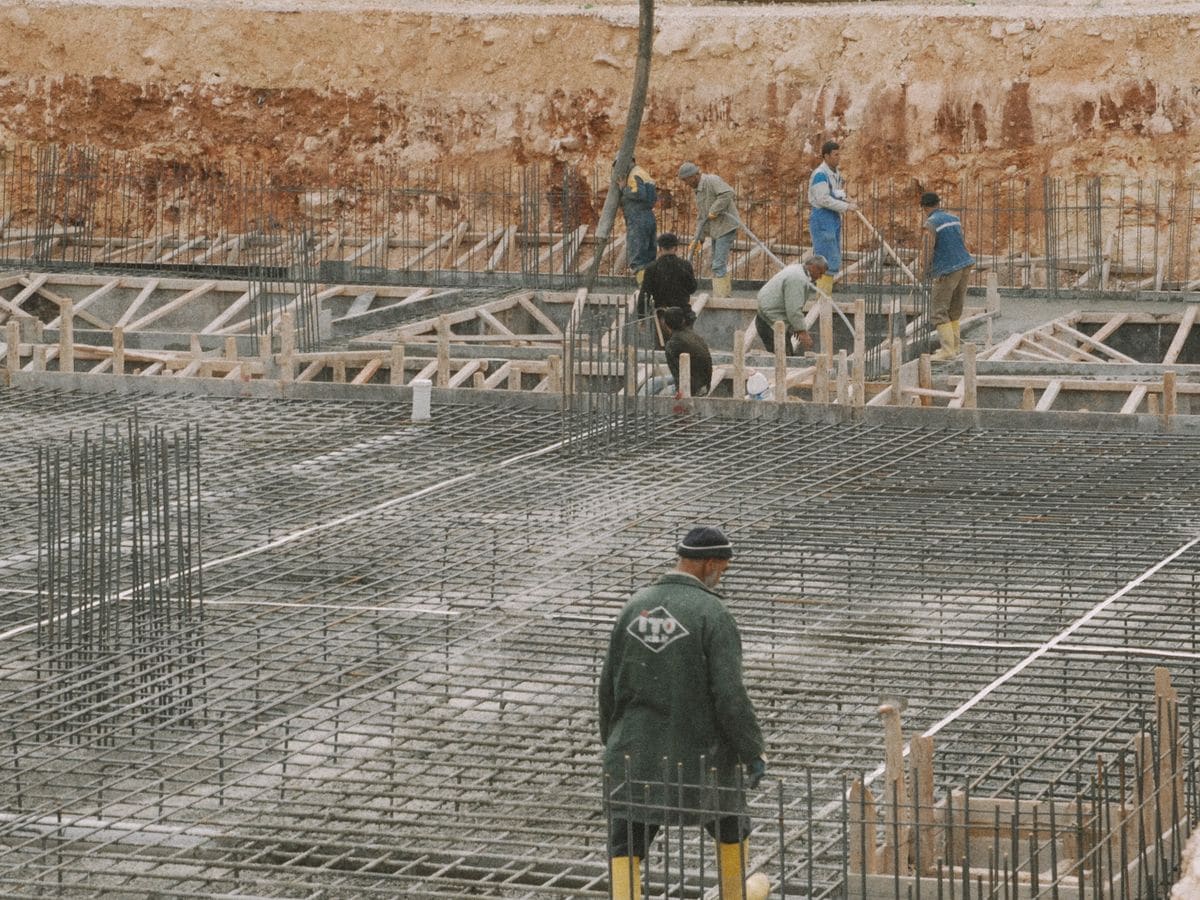
How long to quote a house: where the 15–20 hours go
Quoting one new home in a spreadsheet takes 15–20 hours. Here's where those hours actually go, and which parts you can hand off without losing control of the number.
8 min read

- Trade takeoff
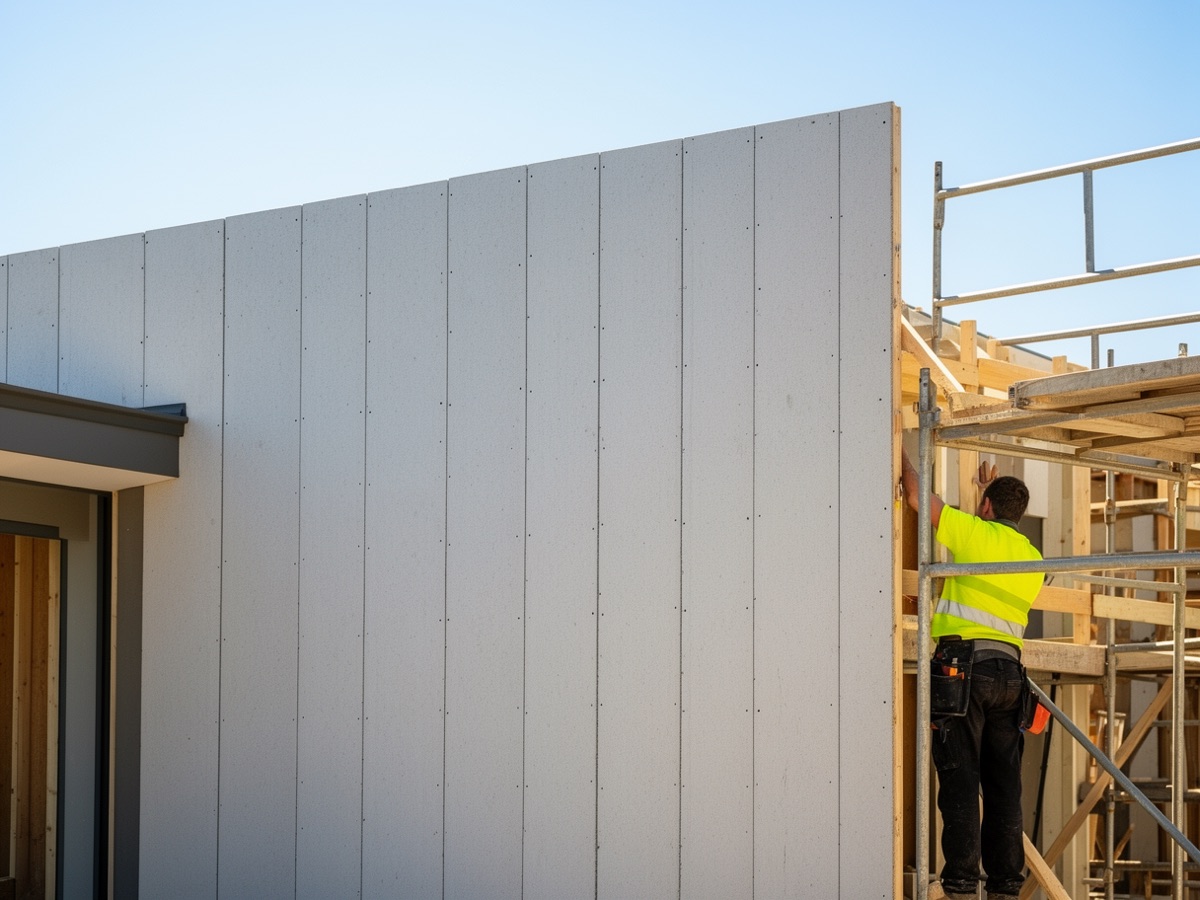
How to take off a Hebel external wall from plans
A practical guide to measuring Hebel PowerPanel external cladding from residential drawings — net wall areas, openings, corners and jointing — and the mistakes that blow the quantity out.
7 min read
- Process
Why three quotes never match (and it's not the prices)
When three subcontractor quotes come back wildly different, the usual culprit isn't the rates — it's that each trade measured the job differently. Here's how to fix the comparison.
5 min read

- Cost
What an in-house estimator really costs in 2026
The all-in first-year cost of hiring a residential estimator in Australia — salary, on-costs, software and ramp-up — and when outsourcing the measuring makes more sense.
6 min read



Longer notes on reading quotes are on the blog .